Accelerate onboarding and protect institutional memory.
Reduce ramp time, lower manager burden, and capture expertise before employees leave, instead of after.
Why This Matters to You
As CHRO or CPO, you own the employee lifecycle, and knowledge friction shows up at every stage of it. Slow onboarding, uneven manager burden, attrition risk tied to frustration rather than compensation, and the institutional knowledge that quietly walks out the door every time someone leaves. Most of these are treated as separate HR problems. They're really one knowledge problem showing up in different places.
Common CHRO / CPO Concerns
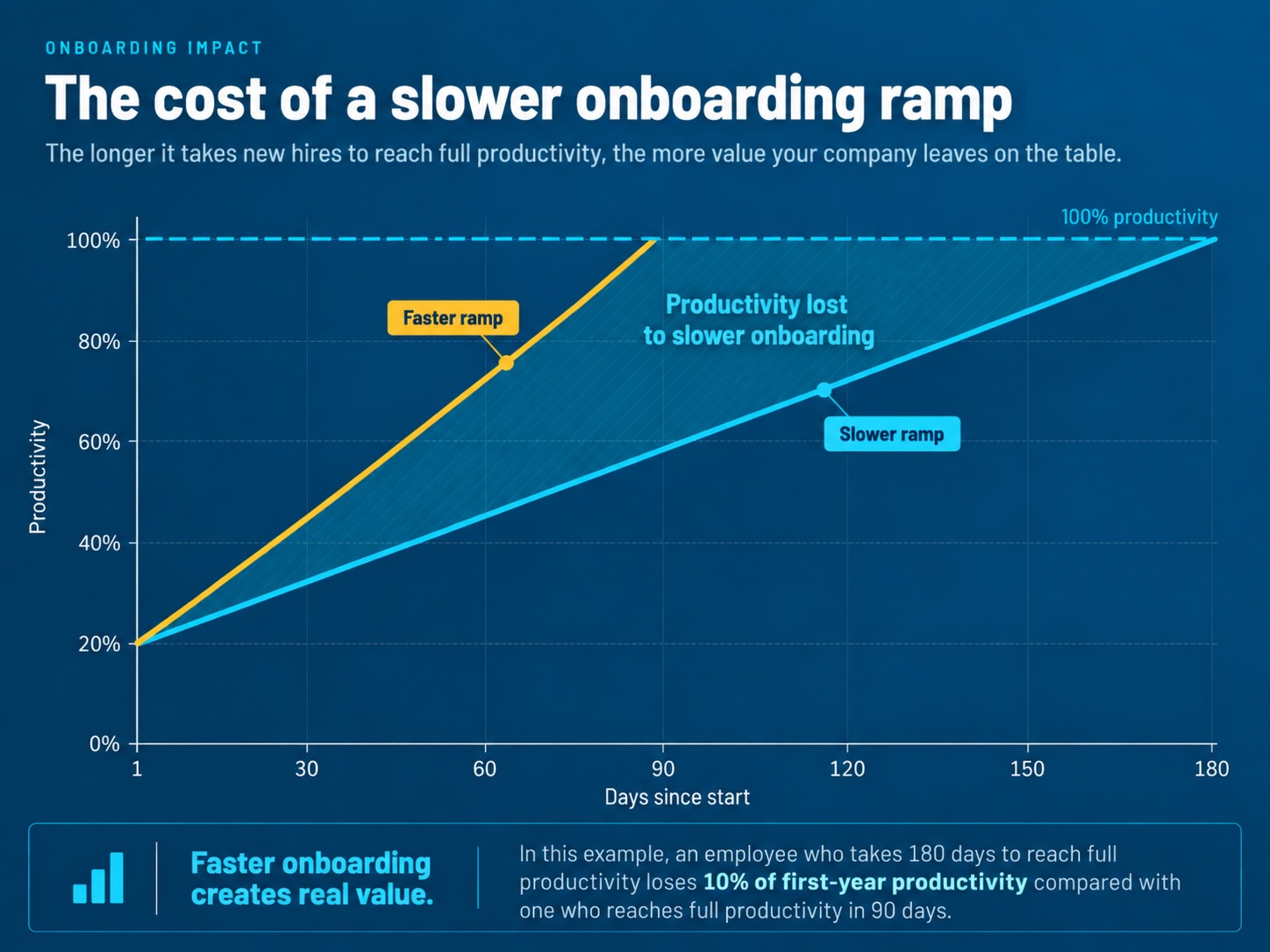
- New-hire ramp time. New employees take months to become productive because critical process knowledge was never documented.
- Employee frustration. People who can't find trustworthy answers become frustrated, disengaged, and more likely to leave.
- Attrition risk. Turnover is more disruptive, and more likely, when roles depend on undocumented, personal knowledge.
- Succession exposure. Leadership transitions stall without a structured way to transfer what an outgoing leader knows.
- Institutional knowledge loss. Every departure without a structured handoff is a small, permanent loss.
- Manager dependency. Managers absorb onboarding and knowledge gaps that a better system should be handling.
How Glymr Helps
Knowledge Exit Interviews rapidly capture what a departing employee knows (responsibilities, relationships, risks, and context) before it's gone for good. Executive Knowledge Transfer structures the same process for departing, retiring, or transitioning leaders, at a level of depth appropriate to the stakes. And Knowledge Management Programs builds the durable system that reduces ramp time for every new hire going forward, not just the ones you're actively worried about.
Some Glymr Client Results
What You Get
- Faster onboarding. New hires reach full productivity sooner because critical process knowledge is documented and findable.
- Higher engagement. Employees get trustworthy answers instead of hunting or guessing, reducing frustration.
- Lower disruption from turnover. Roles no longer depend on one person's undocumented knowledge, so departures are less disruptive.
- Smoother leadership transitions. A structured way to transfer what an outgoing leader knows before they go.
- Retained institutional memory. Departures no longer mean a permanent, uncaptured loss.
- Freed-up managers. Managers spend less time as the default knowledge source and more time managing.
"We had Glymr perform Knowledge Exit Interviews for 6 outgoing executives during a recent reorganization. They were extremely helpful in many ways."
Score Your Exposure
The Knowledge Gap Self-Check scores how exposed your organization is to knowledge loss through departures, transfers, and promotions (ten statements, about two minutes).
Related Reading
See Onboarding & Ramp Time and Critical Knowledge Risk for a closer look at both sides of this problem.
Find out what is slowing onboarding down and walking out the door.
A Knowledge Friction Assessment measures ramp time, manager burden, and where institutional knowledge sits in individual people rather than in the organization.