Quantify the hidden cost of knowledge friction.
Search time, duplicated work, slow onboarding, and knowledge loss have a measurable price. Glymr helps you see it, and reduce it.
Why This Matters to You
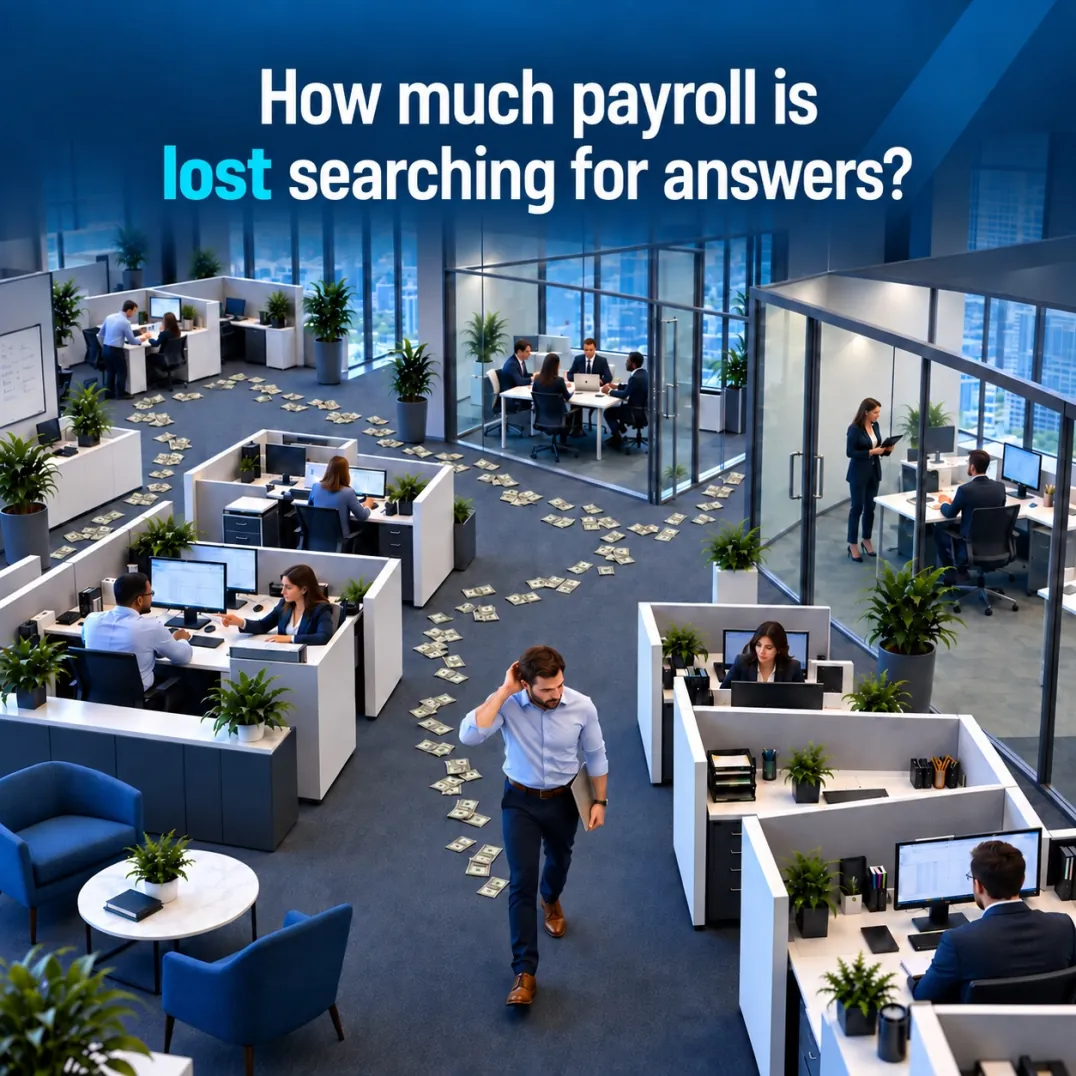
As CFO, you're used to line items you can measure. Knowledge friction rarely appears as one, but it shows up in the numbers you already track: productivity leakage, duplicated work, slower onboarding, higher cost-to-serve, and the operational disruption that follows a key departure or a rocky integration. It's a real cost. It's just diffuse enough that it usually goes unmeasured until someone quantifies it.
Common CFO Concerns
- Productivity leakage. Time lost to searching, re-asking, and reconstructing work that already exists somewhere.
- Cost of inefficiency. Slower onboarding, slower execution, and more manager time spent answering avoidable questions.
- Duplicate work. Teams rebuilding analysis, documents, and decisions that already exist because nothing was shared.
- M&A value leakage. Undocumented knowledge that suppresses valuation or slows integration after close.
- Risk from key-person dependency. Concentrated knowledge that creates exposure if a critical employee leaves.
- Measurable savings. The ability to point to a specific, quantified return from addressing knowledge gaps.
How Glymr Helps
The Knowledge Friction Assessment identifies, quantifies, and prioritizes the specific places where the organization is losing time, money, and operational capacity to knowledge drag, giving you a defensible, numbers-based case for where to act first. Where the exposure runs through technology spend and system redundancy, Data Landscape Mapping surfaces the specific systems and costs involved, including redundant tools the organization may still be paying for.
What It Costs to Find Out
Quantifying knowledge friction shouldn't require its own business case.
A Knowledge Friction Assessment is a low-cost fixed fee, agreed before the work starts, not an open-ended engagement with a meter running. The internal cost is about 10 minutes per employee to complete the survey, 10–12 questions from the sponsoring executive, and one to two hours for the readout. Start to finish it takes roughly two weeks, depending on how quickly responses come in.
There is no discovery phase to fund and no scope to renegotiate mid-engagement. You know the full commitment, in both spend and staff time, before anything begins, and what comes back is a quantified baseline with prioritized recommendations you can hold subsequent decisions against.
What You Get
- Recovered productivity. Less time lost to searching, re-asking, and reconstructing work that already exists.
- Faster onboarding and execution. Less manager time spent answering avoidable questions.
- Less duplicated work. Teams reuse existing analysis, documents, and decisions instead of rebuilding them.
- Protected deal value. Documented knowledge supports valuation and speeds integration after close.
- Reduced key-person exposure. Critical knowledge no longer disappears if one employee leaves.
- A quantified business case. A specific, defensible number for the return on addressing knowledge gaps.
Further Reading
Where the exposure is transaction-related, Knowledge Management for Mergers & Acquisitions covers how undocumented knowledge suppresses valuation and slows integration.
Related Reading
Start with Knowledge Friction for the underlying problem this page quantifies, or see M&A Knowledge Risk if the exposure is transaction-related.
Put a number on what knowledge friction is costing.
A Knowledge Friction Assessment produces a quantified baseline and prioritized recommendations: a defensible case for where to act, with the full commitment in spend and staff time known before it starts.